How a fencing project became a closure proposal
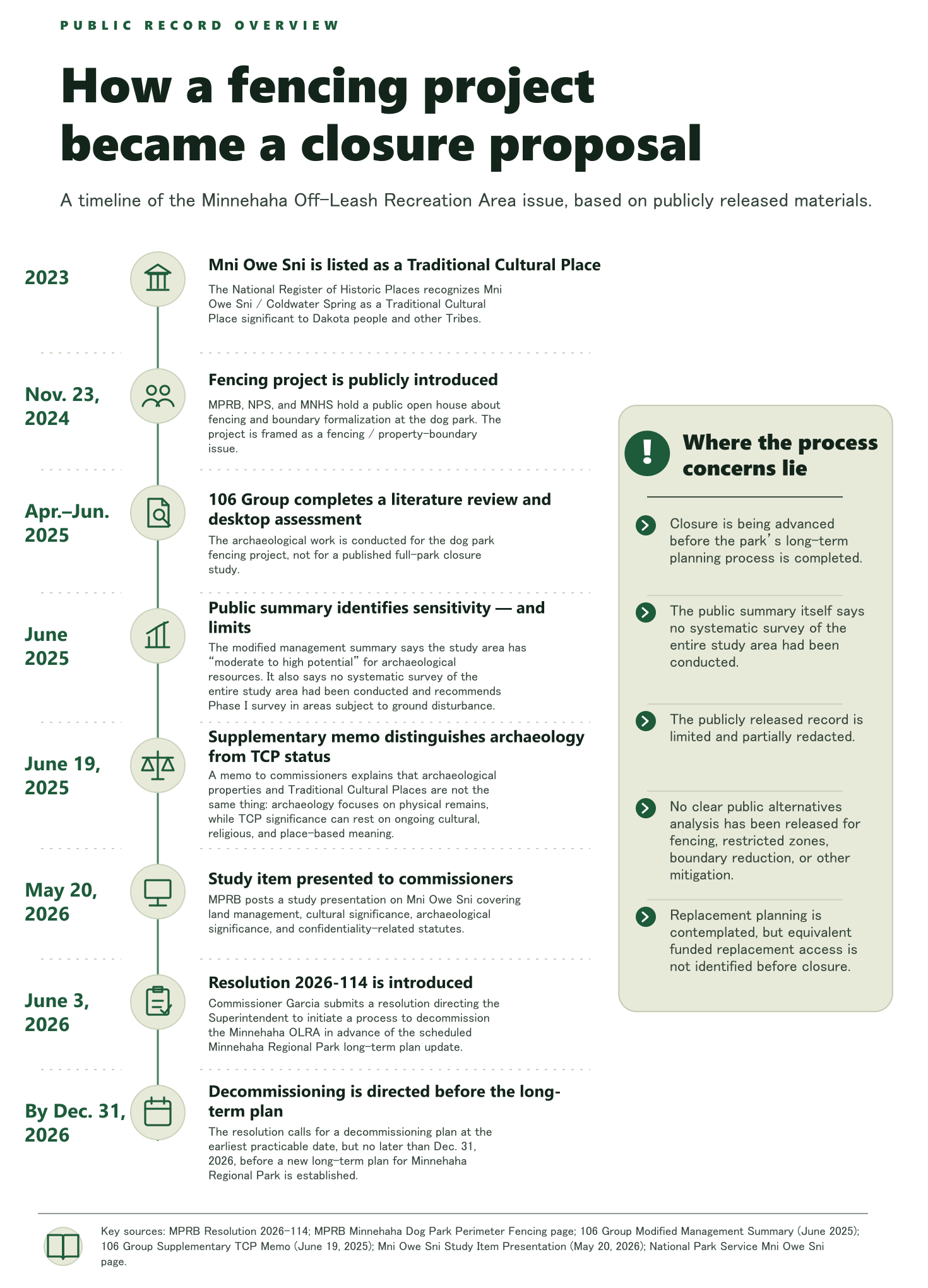
This page tracks the public record. It does not decide whether Mni Owe Sni / Coldwater Spring, burial sites, archaeological resources, or living cultural practices deserve protection. They do.
The question is narrower: how did MPRB move from a boundary-management project to decommissioning a major off-leash amenity before releasing the disclosable record, alternatives analysis, permit-holder analysis, and funded replacement plan?
What the timeline still does not answer
Unanswered questions
- What changed? What new evidence, legal determination, or policy conclusion made managed access impossible after MPRB had publicly described fencing, boundary control, and continued river/beach access?
- What is the factual predicate? Is MPRB relying on confirmed burial sites, suspected burial sites, archaeological sensitivity, Traditional Cultural Place incompatibility, ceremonial-use concerns, ecological restoration, adjacent-property enforcement, or some combination? Burial Sites
- Was the physical land record evaluated? Did MPRB analyze historical river movement, accreted land, floodplain conditions, current visitor corridors, jurisdictional boundaries, and the Ordinary High Water Level before choosing full decommissioning? Physical Record
- Were narrower alternatives analyzed? Where is the comparison between decommissioning and fencing, boundary reduction, protected zones, leash corridors, shoreline buffers, seasonal or event restrictions, monitoring, enforcement, additional survey, restoration buffers, partial closure, relocation, or replacement?
- What did commissioners know, and when? Were there private briefings, closed meetings, serial communications, advisory meetings, or outside discussions? Who attended? What legal basis was used? Were required recordings created and preserved? Was any consensus built outside open session? Decision Makers
- What records are being withheld, and why? Exact protected-site locations may be confidential. MPRB can still disclose segregable public conclusions, methods, confidence levels, generalized management zones, recommendations, alternatives considered, and reasons alternatives were rejected.
- What happens to permit holders? Where is the analysis of lost access, system capacity, crowding, substitute sites, refunds, credits, fee adjustments, and funded equivalent replacement before access is lost? River Access
Bottom line
The timeline does not show that MPRB is wrong to protect sensitive places. It shows that MPRB has not disclosed enough to justify decommissioning first and explaining later.
Before implementation, MPRB should release the legally disclosable record, certify any withholding, account for meetings and briefings, publish alternatives and permit-holder analyses, hold a public hearing after disclosure, and fund equivalent replacement access before Minnehaha OLRA access is lost.
Related pages
Suggested sources
- MPRB Resolution 2026-114.
- MPRB Minnehaha Dog Park Perimeter Fencing project page.
- 106 Group Modified Management Summary, Archaeological Literature Review and Assessment.
- 106 Group Supplementary Memo re: Traditional Cultural Places.
- Mni Owe Sni Study Item Presentation.
- Minn. Stat. Ch. 13 and Minn. Stat. § 13D.05.